




I am Hanane Thamik (He Xiaona), born in the sea breeze of Casablanca, Morocco, yet I have found my spiritual home in the river waves of Wuhan, China. On the afternoon of September 18, 2013, when the autumn sun slanted low, I stepped through the glass doors of Shanghai Pudong International Airport. What greeted me was not only the moist southeast monsoon but also an oriental nation in the throes of profound transformation. Little did I know then how this journey of study across ten thousand miles would reshape the trajectory of my life.
I. Warmth in a Foreign Land: From Strangeness to the Transformation of “Home”
When I first arrived in China, cultural differences and language barriers formed an invisible wall, quietly separating me from this land. On cold nights in a foreign country, a sudden illness left me feeling even more isolated. But it was then that ten Chinese friends took turns accompanying me through the long corridors of the hospital, weaving smiles and care into a spring breeze amid the cold, pungent smell of disinfectant.
They were like people holding burning charcoal in the cold night—some pored over every word to translate medical instructions for me, some gently patted my back to soothe me when I winced in pain, and others stayed quietly by my side in the infusion room until dawn broke. Those rushing figures, the overlapping warmth of palms, and the morning light filtering in from the end of the corridor let me truly touch the most simple warmth of humanity: it lies not in grand ceremonies, but in a cup of hot water handed by a stranger, in the promise “we are here” when keeping vigil, and in suddenly understanding another form of “home” in a foreign land.
Most unforgettable was the admission letter sent by my supervisor Professor Wu late at night. The faint glow of the screen at 2 a.m. not only lit the threshold of the academic temple but also illuminated the budding dream of an international student—at that moment, the outline of the future emerged clearly in the light and shadow, full of hope. Behind the door opened by the dormitory auntie, a steaming bowl of homemade noodles melted the thin ice of language barriers, letting me feel the warmth of “home” for the first time. And Dean Professor Hu’s powerful words echoed like a promise: “You will reach the other shore.” These warm fragments pieced together the most touching light in the cold nights of a foreign land, lighting the way forward and warming a wandering heart.
II. Standing Together Through Storm and Rain: Choosing to Breathe with This City
Then came the winter of the Gengzi year, when an unexpected storm swept across Wuhan, the River City. As evacuation flights for Moroccan citizens streaked across the lead-gray clouds, I stood alone on Luojia Hill, gazing at the empty streets. In that moment, identity labels felt light and irrelevant. Whether it was the honor of “Wuhan City Promotion Ambassador” or the title of “Outstanding African Student in China,” they all turned into a call from the bottom of my heart—if “a drop of grace” had moistened my heart, then repaying it with a spring was the only path to take.
My mother said softly over the transoceanic call: “Child, stay. I will pray for China.” Those words sank like a rock into my heart, stirring layers of ripples. Yes, I chose to hold my breath with this city, to clasp the hands of millions of yellow-skinned people amid the storm and chaos. Watching over each other in the storm required action as an anchor. The 5,000 yuan I donated was but a drop in the vast river, yet it unexpectedly reflected the sun’s light—my sincerity crossed mountains and seas and earned recognition from Foreign Minister Wang Yi. This precious affirmation from my adopted country instantly gave my humble effort immense weight. What I never expected was that this experience of sharing life and death would become a voice in the Foreign Ministry’s “Blue Hall” in 2023. When leaders from the Department of African and West Asian Affairs told the world the story of an African girl and Wuhan, I seemed to see my heartbeat from those days rippling through the grand narrative of a community with a shared future for mankind, carried by the calm voice of diplomats.
During those days of standing together through the storm, I witnessed the bravery of medical workers—the most beautiful “retrograders,” who built defensive barriers with flesh and blood. The rapid construction of Leishenshan and Huoshenshan Hospitals, and the courage of Academician Zhong Nanshan stepping forward, let me deeply feel the strength and resilience of China. And I found my place in this storm too. I joined online volunteer services, providing psychological support to people in quarantine; I used my professional knowledge to offer data support for epidemic prevention and control. Though my strength was small, I believed every effort contributed to the fight against the epidemic. This storm deepened my understanding of “home”—it is not just a shelter from wind and rain, but a community that stands together in times of crisis.
III. From Luojia Hill to the World Stage: Passing on Chinese Warmth
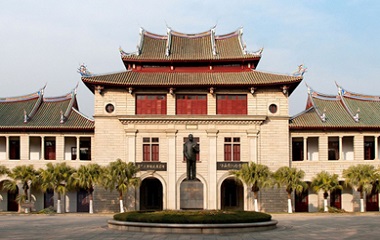
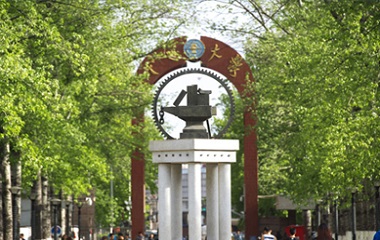
Standing atop Luojia Hill and overlooking the misty vastness of East Lake, looking back on ten years of study, I suddenly realized that my growth trajectory is deeply intertwined with the development of this city. From a green newcomer arriving in the River City to an ordinary girl who won the title of “Chinese Government Outstanding International Student in China,” I have followed the winding knowledge bond of the Belt and Road Initiative to stand on the highest halls of human thought, telling the contemporary epic of an ancient nation reborn from fire. This is no isolated legend, but a broad highway paved with countless cornerstones of Chinese-style modernization: it is the heavy Chinese Government Scholarship (CSC) that lifted the economic burden of my studies; it is the discerning eyes of teachers at the International College that opened up the vast galaxy of academia to me; and it is the figures in “white armor” who built a Great Wall of life with flesh and blood in the darkest hours, writing the most tragic footnote to the majesty of the “Three Mountains”—Leishenshan and Huoshenshan rising in ten days and nights, and the mountain-like backbone of 80-year-old Academician Zhong Nanshan, together forging a spiritual Great Wall condensed from the benevolence of doctors and the will of the whole nation!
All these fragments finally piece together the ultimate truth of Chinese-style modernization in my eyes—it is not only the grandeur of skyscrapers piercing the clouds or the speed of high-speed trains crisscrossing mountains and rivers, but the warmth for people deeply rooted in the nation’s fabric and flowing through daily life. This warmth lets international students who have traveled across oceans regard a foreign land as their hometown, lets youthful dreams grow freely in inclusive soil, and lets the trickle of individual struggle converge into a mighty river driving human progress. When I spoke of China’s poverty alleviation miracles under the bright lights of Geneva, and passed the torch of youth responsibility in the solemn hall of the United Nations Headquarters in New York, what I conveyed was precisely the fruitful fruit nurtured by this warmth: an oriental answer that powerfully proves development and dignity are not two parallel lines that never meet, but the same bright summit that can be reached hand in hand.
Today, I work in China while participating in multiple international projects led by the National Development and Reform Commission and the Ministry of National Defense. The magnificent vision of Chinese-style modernization provides the most fertile soil and guiding compass for this cross-mountain cross-cultural dialogue. It has long transcended mere economic leap and technological innovation; at its core shines a profound focus on “people’s modernization”—committed not only to the prosperity and dignity of its own nation, but also sharing development opportunities and wisdom with the world with an open mind. Every project I participate in is infused with this modern pursuit rooted in Chinese civilization yet oriented toward global well-being. What we promote is not only the connectivity of facilities and rules, but the mutual enlightenment of development concepts and the rooting of shared human values.
Ambassador Li Changlin said in an interview with CGTN: “He Xiaona studied at Wuhan University in 2013. Our embassy, including myself, has communicated with her. She is an excellent Moroccan international student. She has won more than 40 awards in China and set an example for international students. There are several other students like her in China who speak Chinese fluently and have a good understanding of Chinese history and culture. He Xiaona not only excels in studies but also participates in social work. For example, after the outbreak in Wuhan, she donated 5,000 yuan, an act highly praised. I believe more young people will come to China, and these young people will become an eternal force promoting friendship and cooperation between China and Morocco.” The ambassador’s words illuminated the essence of my path like a lens: true cross-cultural exchange requires diving deep into the riverbeds of each other’s civilizations, touching the emotional bedrock and value pillars that support the entire edifice of civilization. When I tell micro-stories of China’s poverty alleviation on international occasions, convey the resilient exploration of African community development, or explain the shared kindness rooted in The Analects and “Ubuntu,” what I aspire to be is precisely such a “translator” and “bridge-builder” of civilizations—on the broad stage provided by Chinese-style modernization, weaving with sincerity and knowledge as shuttles a tapestry of shared destiny where different civilizations understand and achieve each other. Every thread of this tapestry ties to the relaxed brows of cotton farmers along the Silk Road, connects to the sustainable lights lit in fishing villages of Pacific island nations, and holds fast to humanity’s unquenchable yearning for common prosperity and dignity.
As a Moroccan youth rooted in China for 13 years, the Chinese warmth in my eyes is a mighty force of warmth gathered over twelve springs and autumns! This force witnessed my astonishing transformation from being alienated and estranged from this land to loving it as “home”; this force accompanied me to stand side by side with the Chinese people and remain unyielding in stormy days; this force drives me to stand confidently on the world stage and tell wonderful China stories to the globe. This warmth crosses mountains, lakes and seas, like a blazing flame, igniting and nourishing the dreams of every international student; it lets international students breathe and grow with the city, and becomes an unbreakable, eternal bridge in cross-cultural dialogue!