



International Youth Discover the Cultural Charm of Xiangcheng
On August 7, 2026, international students from Shanghai University and Soochow University — representing Chile, Colombia, Cuba, Iran, Russia and Ukraine — gathered in Xiangcheng District, Suzhou, for the "Summer Lotus & Suzhou Elegance" Chinese Aesthetics Experience and Suzhou International Cultural Experience Ambassador Program. The day-long immersive journey took them through wetlands, heritage sites and art museums, offering a multifaceted encounter with the area’s Jiangnan culture that went well beyond conventional sightseeing.
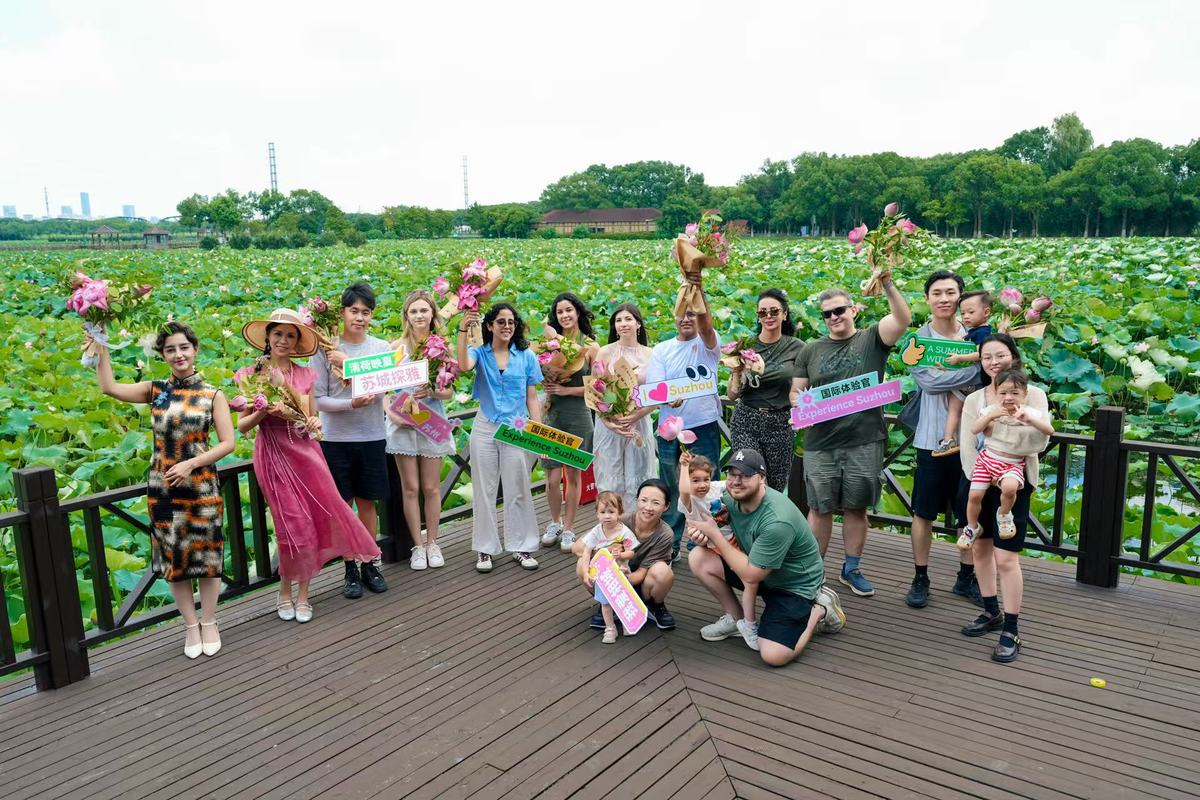
The program combined guided visits with hands-on activities, allowing participants to engage directly with Xiangcheng's natural landscapes, intangible heritage, architecture and traditional arts.
The morning began at Lotus Pond Moonlight Wetland Park, where vast fields of blooming lotus created a quintessential Jiangnan summer scene. After taking in the view from traditional rowing boats, participants tried their hand at lotus flower arrangement — an activity that proved particularly striking for those unfamiliar with the flower's cultural weight in China.
Cuban participant Maria Fernanda Luaces called the lotus arrangement a highlight. She noted that lotus flowers are rarely used in bouquets in her home country and learned that the flower carries strong cultural symbolism in China, especially in summer. She was fascinated by the way seasonal changes shape Chinese ideas of beauty, describing the experience as a meaningful cultural exchange.
Russian participant Tovuu Kan Demir said he had long been drawn to Suzhou after reading the saying, "Above there is paradise; below there are Suzhou and Hangzhou." After creating his own lotus arrangement, he shared photos with friends abroad, who were impressed by the elegance and tranquility of Jiangnan's scenery.
From the wetlands, the group moved to KYLN HOTEL SUZHOU, where the focus shifted from nature to craftsmanship. There, participants learned about Imperial Kiln Bricks, a renowned form of intangible cultural heritage originating in Lumu, Xiangcheng. Historically produced for the Forbidden City during the Ming Dynasty, each brick traditionally requires a year-long production process following the 24 solar terms.
The hotel itself incorporates Imperial Kiln Brick heritage into its contemporary architectural design — an approach that caught the attention of Chilean participant Karina Campos, who specializes in museums and cultural heritage. She praised Xiangcheng for not confining heritage to museums but integrating it into modern spaces, complemented by Suzhou pastries and handmade noodles to create a vivid expression of Chinese aesthetics.
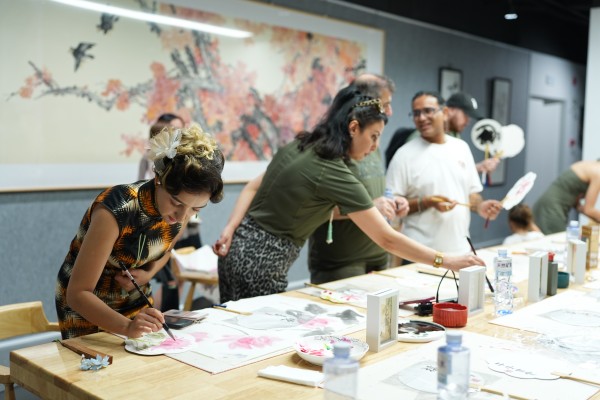
The final stop was the Zhang Jixin Art Museum, where participants explored Suzhou-style aesthetics through ink painting, qipao culture and Song brocade craftsmanship. Hands-on activities included lotus and orchid painting, traditional pan kou knot-making, and introductions to traditional clothing — each offering a tactile entry point into Chinese artistic traditions.
Ukrainian student Mytko Valeriia, who studies International Chinese Language Education at Shanghai University, said Suzhou stands out as an ideal place to experience traditional Chinese culture. She was particularly impressed by Xiangcheng's balance of modern development and water-town heritage, and through activities like orchid painting and learning about the qipao, she gained a deeper understanding of the subtle elegance of Chinese art.
Colombian participant Daniela Hernandez, who studies cultural heritage, highlighted the diversity of the experience. She noted that Xiangcheng brings together wetlands, imperial heritage, traditional arts and local craftsmanship to create a comprehensive introduction to Jiangnan culture — an excellent destination for international visitors seeking deeper understanding.
For Iranian participant Bodaghi Aylar, who has lived in Suzhou for three years, the program offered a fresh perspective on a city she already calls home. Having observed Xiangcheng's rapid development, she said the journey — from wetlands and museums to heritage-inspired architecture — demonstrated how modernization and cultural preservation can progress together.
The program also broadened participants' understanding of Jiangnan itself. While the region is often associated with classical gardens, Xiangcheng presented a more diverse picture: natural wetlands, distinctive local heritage and contemporary cultural spaces existing side by side. Many participants said they hoped to share their experiences with friends and family and return to explore more of Jiangnan's water towns, folk traditions and craftsmanship.
Organizers said future programs will continue to draw on local cultural resources — including Lotus Pond Moonlight, Imperial Kiln Bricks, Yuanhetang cultural initiatives and local museums — further bringing intangible heritage to life and showcasing Xiangcheng as a place where history and modern life coexist. Through immersive experiences like these, Xiangcheng aims to strengthen exchanges among young people from around the world and foster deeper people-to-people connections.