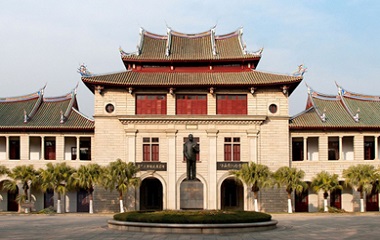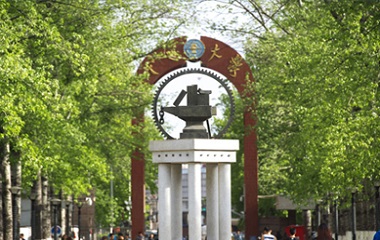





In the autumn of 2023, I came to Shanghai from Kunming, the capital city of Southwest China's Yunnan province, after completing my first master's degree. I arrived with a growing curiosity about the art and culture of China and enrolled in the MFA program in Intercultural Communication Studies at the Shanghai Theatre Academy (STA). What began as a two-year academic journey became one of the most meaningful chapters of my life.

Before coming to China, my knowledge of Chinese art and culture came mainly from books and scattered information online. But my two years at STA completely changed that. For the first time, I had the opportunity to experience traditional Chinese arts firsthand, learn from professional teachers, and see many high-level performances up close.
I grew up in Manipur, a beautiful state in Northeast India, and have been connected with Manipuri classical dance since childhood. Manipuri dance is deeply connected with tradition and spirituality, with graceful movements, controlled expressions, and storytelling through the body. When I first encountered Peking Opera, I found it very different. Its stylized movements, expressive gestures, costumes, makeup, and singing were unfamiliar to me.
My first live Peking Opera performance at STA left a deep impression on me. The elegance of the movements and the beautiful melodies opened a new world for me. At first, however, I could not understand the performance. I could not recognize the different character types or fully understand the stories behind the lyrics.
With the help of my teachers, I slowly began to understand. They explained the stories, traditions, movements, and cultural meanings behind Peking Opera. I realized that it was not simply a stage performance. It carries Chinese history, aesthetics, values, and emotions.
As I learned more, I also discovered similarities between traditional Chinese and Indian arts. Although their performance styles differ, both are Oriental art forms that share many common artistic elements. This connection made Peking Opera feel less distant to me and helped me appreciate its beauty even more.

During my time at STA, Peking Opera gradually became part of my daily life. I listened to its arias while cooking, walking, traveling, and doing household chores. In the summer of 2024, I joined the STA Peking Opera Summer School course and started learning from the basics.
Every movement required patience and practice. I learned basic stances, eye expressions, finger movements, and stage steps. After hours of practice, I often felt tired and sore, but I never wanted to give up. I realized that the beauty we see on stage is built on years of hard work and discipline. This experience gave me a deeper respect for traditional Chinese artists and their spirit of dedication.

After days of practice, I learned the singing and movements of Li Hua Song. Later, I participated in the 2024 "Enjoy Reading China" Chinese Storytelling Competition for International Students in China. I bravely performed a female role (Qingyi), portraying Yang Yuhuan, one of Chinese history's most celebrated beauties and a famous royal concubine of the Tang Dynasty (618-907), in Peking Opera.
When I put on Yang Yuhuan's magnificent costume and started singing, I instantly felt like the most beautiful person in the world. I was so moved - completely captivated by her charm. I want to share this experience on a global stage and let the world see the beauty of Chinese opera.
With the unique perspective of a foreign learner, my performance was heartfelt and nuanced, deeply impressing the judges and audience, and helping my team win the national first prize. Standing on the stage, I truly felt the inclusive, open nature of Chinese culture - capable of touching young people from all over the world.
Outside the classroom, I also documented my life in Shanghai and my experiences at STA through social media. I shared ordinary moments - friendly classmates, helpful teachers, campus life, and my discoveries in the city. My content also helped encourage young people from Manipur to learn more about traditional Chinese culture. In two years, five young artists from Manipur later joined the STA Peking Opera Summer School courses and came to China to experience this art form themselves. I was very happy to see how one cultural experience could inspire another.

My two years at STA gave me much more than academic knowledge. I made friends from China and many other countries. I also tried to connect international and Chinese students by organizing small gatherings and cultural exchange activities with my classmates. These experiences helped us understand one another better despite our different cultural backgrounds.

I actively participated in cultural exchange and volunteer activities and received several awards in national and municipal competitions. I also received the Shanghai Municipal Government Scholarship and graduated in 2025 as an Outstanding International Graduate.
Shanghai itself also became an important part of my journey. I love the city because it welcomes people from all over the world. It is a modern global city, but it is also a cultural center where traditional and contemporary arts meet. For me, Shanghai is also a city of opportunity - a place where young people can learn, grow, and follow their dreams.
In 2025, I represented India in the "SCO.10 Youth Story" short-video project organized by CCTV-4. In 2026, I again represented India in the "SCO Youth in Action" short-video creation camp organized by China Media Group for the 25th anniversary of the Shanghai Cooperation Organization, telling authentic, heartwarming Chinese stories from a youth perspective to a global audience. As a cultural and tourism blogger, I continue to promote cultural and youth exchanges between China and India.

Looking back, my journey at STA was not only about studying intercultural communication. It was about experiencing another culture, finding connections between different traditions, and discovering my own path.
China and India have shared cultural and intellectual exchanges for centuries. Shanghai itself has been part of this history. More than a century ago, Indian poet and Nobel laureate Rabindranath Tagore visited Shanghai, contributing to the cultural and intellectual exchanges between our two countries.
I hope to continue this long tradition of friendship and mutual learning. I also want to introduce more traditional Chinese culture, especially Peking Opera, to young people in India and other parts of the world.
From curiosity to understanding, and from learning to sharing, STA gave me an opportunity to fulfill a childhood dream and opened a new chapter in my life.
Shanghai will always hold a special place in my heart - the place where my dream of studying art and culture finally came true.
About the author:
Moirangthem Zerin comes from Manipur, a state in northeastern India. He is an executive director of Yunnan Leepun Cultural Media Co Ltd.