



On July 7, young representatives from countries including China, Indonesia, Morocco, South Africa, the United States, Uzbekistan and Vietnam visited Hangzhou, exploring the Southern Song Dynasty Deshou Palace Ruins Museum, the Former Residence of Hu Xueyan, Hefang Street, the Southern Song Imperial Street and Hangzhou Artificial Intelligence Town. Through a journey connecting the past and present, the participants immersed themselves in the ancient capital' s rich cultural heritage, business traditions, vibrant everyday life and technological innovation.

The first stop was the Southern Song Dynasty Deshou Palace Ruins Museum. Centred on the archaeological site itself, the museum uses augmented reality (AR) technology to digitally reconstruct the layout of the Song dynasty' s imperial gardens. Exposed architectural remains and unearthed artefacts illustrate the refined and understated aesthetics of the Song dynasty, bringing its thousand-year-old cultural heritage to life.

In an interview, Moroccan participant Rachid El Housseini Hilal said: “The Southern Song dynasty seemed distant and abstract when I read about it in books. But standing at the site and seeing the gardens in their entirety through digital technology, I finally gained a real understanding of Song dynasty culture. Technology has enabled this ancient civilisation to reach people across time and space.”

The young participants then visited the Former Residence of Hu Xueyan, renowned as the finest mansion in the Jiangnan region. Elegantly arranged pavilions and waterside terraces, along with intricate brick, wood and stone carvings, reflect a blend of traditional Chinese garden aesthetics and the business wisdom of Zhejiang merchants during the late Qing dynasty. The participants experienced the craftsmanship of traditional Chinese architecture and gained insights into the values of integrity and openness that underpin Zhejiang' s business culture.
American participant Mae Leigh Elliott said: “This historic residence is more than just a beautiful old building. It also offers insights into how Chinese people approach business and their open-minded attitude towards others. I now understand how Zhejiang merchants have always actively sought connections both within China and abroad, engaging with people from different places with openness and inclusiveness.”

Along the Southern Song Imperial Street and Hefang Street, the young participants strolled along ancient stone-paved roads, experiencing both the elegance of the former imperial thoroughfare and the lively atmosphere of traditional neighbourhoods. The streets are lined with businesses showcasing intangible cultural heritage, where traditional crafts such as Hangzhou fan-making, silk production and woodblock printing remain alive. Local snacks and long-established shops offer an authentic glimpse into everyday life in Hangzhou.

Vietnamese participant Phung Thi Yen Hoa said: “There is a genuine warmth to everyday life here. History is no longer confined to artefacts in museums but is woven into daily life on the streets. To me, this is China at its most captivating.”
The final stop was Hangzhou Artificial Intelligence Town. As a hub for technological innovation in the digital economy, the town focuses on artificial intelligence, the metaverse and digital cultural and creative industries. The participants explored cutting-edge innovations, including digital interpretations of Song dynasty cultural heritage and AI-powered cultural communication, discovering how technology can help bring traditional Chinese culture to international audiences.

South African participant Baneka Kene remarked: “Artificial intelligence has given the thousand-year-old cultural heritage of the Song dynasty entirely new ways to reach people. Technology builds bridges of communication that transcend national borders, opening up new possibilities for cross-cultural exchange.”

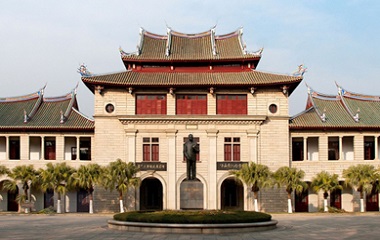
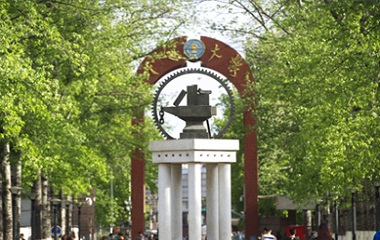
On the afternoon of July 8, the “My China Surprise” cultural exchange event in Hangzhou was held at Hangzhou Dianzi University. Guests included Cheng Zhenwei, deputy director of the Publicity Department of the CPC Hangzhou Dianzi University Committee; Wang Yi' an, dean of the university' s School of International Education; Fei Chenhan, deputy dean of the school; and invited expert Professor Zhou Chengsi, deputy head of the Department of Journalism at Wuhan University' s School of Journalism and Communication. Chinese and international youth and experts from universities including Hangzhou Dianzi University and Zhejiang Gongshang University gathered to discuss mutual learning between civilisations.

In his opening address, Wang Yi' an spoke of Hangzhou’s rich Song dynasty heritage and vibrant technological innovation. He noted that the study visits and discussions provided a platform for exchange between Chinese and international youth. He encouraged young people to become “digital Marco Polos” of the new era, using digital perspectives to tell stories that present an authentic and well-rounded picture of Hangzhou and build bridges of communication between young people in China and abroad.

During the expert talks, Professor Zhou Chengsi said that genuine, immersive experiences offer the best way to tell China' s stories, and that people-to-people exchanges among young people can help break down barriers to mutual understanding.

Drawing on Hangzhou Dianzi University' s academic strengths, Cheng Zhenwei emphasised the importance of staying true to cultural roots in digital communication and using information technology to explore new ways of bringing Chinese culture to international audiences.

The youth sharing session featured a diverse range of perspectives. Zhang Wenyue, a student at Hangzhou Dianzi University, shared how her team conducted thousands of experiments to achieve a breakthrough in core rare-earth permanent magnet technology, breaking an overseas monopoly. Her story demonstrated the commitment of young Chinese researchers to scientific innovation and self-reliance.
Richard, an international student, drew on his experiences of playing football on campus to explain how the inclusive atmosphere he encountered in China helped break down barriers between young people from different countries. Drawing on the shared cultural roots of China and Vietnam, Phung Thi Yen Hoa described how her initial sense of familiarity with China evolved through immersive experiences. Discovering the country' s digital way of life and the warmth of its people helped her develop a more complete and nuanced understanding of China.

Through field visits and group discussions, the event enabled Chinese and international youth to gain a deeper understanding of cultural heritage through first-hand experiences and build consensus through dialogue. Looking ahead, members of Gen Z from around the world will use digital technology as a bridge and culture as a means of connection, serving as ambassadors for cultural exchange and presenting to the world an authentic and welcoming picture of modern China, where ancient cultural traditions and technological innovation flourish side by side.