



From November 3 to 6, a series of events under the "My China Surprise" initiative took place in Hainan. More than 20 young representatives from over 10 countries and regions, including France, Ghana, Malaysia, Morocco, Russia, the United Kingdom, the United States and Vietnam, visited Haikou's Qilou Old Street, Hainan Resort Software Community in Chengmai, the Wenchang Aerospace Supercomputing Centre, the Boao Lecheng International Medical Tourism Pilot Zone and Hainan Power Grid’s integrated charging and battery-swapping platform. From historic cultural districts to the forefront of technological innovation, the young participants experienced first-hand the openness and vitality of the Hainan Free Trade Port.
The first stop was Haikou's Qilou Old Street. More than 600 Southeast Asian-style arcade buildings line the streets, where long-established businesses continue to thrive alongside a growing number of brands opening their first local stores. Since the launch of island-wide special customs operations, Haikou has welcomed 47 such stores. From the history of Chinese migration to Southeast Asia a century ago to the two-way international exchanges taking place today, openness has long been a defining characteristic of the city.
Vietnamese participant Zheng Ying'er said that every historic building here had a story to tell: "A century ago, Haikou's ancestors set out from this street for Southeast Asia. Today, young people from around the world are following that same path to come here."

The next stop was Hainan Resort Software Community in Chengmai. It is home to China's first public service platform dedicated to supporting the entire process of bringing video games to international markets. The park brings together more than 2,000 gaming and cultural and creative enterprises, with hundreds of products launched across 192 countries and regions. French participant Nicolas Roumaneix was surprised by the figures on Chinese video game exports. "Gaming is a passion shared by young people around the world. What travels overseas with these products is not just entertainment, but also a two-way exchange of cultures," he said.
The third stop was the Wenchang Aerospace Supercomputing Centre, where the entire satellite remote sensing data chain — from collection, reception and storage to computational processing and practical application — has been integrated. Data collected in space is transformed into usable products in Wenchang. The centre also facilitated China's first export of remote sensing data to Singapore. After a rocket lifts off, what remains in Wenchang is more than a trail of smoke: it is also data that can travel across borders. After observing how the data was processed, American participant Elliott Mae Leigh remarked: "What we see is a rocket soaring into space; what we don't see is the computing power working at full speed behind it."

The science talks that followed brought outer space closer to the participants from two different perspectives. Zou Guansheng, director of the Wenchang Aerospace Supercomputing Science and Technology Museum, explained how data collected in space is processed. With a computing capacity of 100 quadrillion operations per second, the centre supports rocket launch trajectory simulations, satellite data processing and calculations for deep-space exploration. A satellite operation and control simulator and an immersive three-panel screen allowed participants to visualise processes that would otherwise remain invisible. Huang Qisen, deputy director of the Wenchang Polar Star Meteorite Museum, explained what rocks from outer space can tell us. More than 400 extraterrestrial specimens offer insights into the solar system, with exhibits including lunar breccia and slices of Martian meteorites. Visitors can even touch many of the specimens. Huang said the decision to establish the museum in Wenchang was based on the city's unique position as an international aerospace hub.

At the Boao Lecheng International Medical Tourism Pilot Zone, the young participants visited a permanent international exhibition of innovative pharmaceuticals and medical devices. As China's only special medical zone, Lecheng benefits from special regulatory policies that allow it to keep pace with international advances in pharmaceuticals and medical devices. The entire process, from fast-track access and bonded warehousing to end-to-end product traceability, was clearly on display. What impressed Ashley Tan, a Malaysian participant of Chinese descent, most was that every box of medicine had its own tracking code. "What’s advancing here is not just medicine, but also hope for patients," she said.

The final stop was Hainan Power Grid's charging and battery-swapping service platform in Haikou. Hainan's province-wide integrated network brings together charging resources across the island, allowing users to access charging services throughout the province with a single app. By coordinating electric vehicles with the power grid, the platform also enables more efficient use of green energy. A young participant from Ghana, known by the Chinese name Meilan, shared her observations. In Ghana, she explained, a shortage of charging infrastructure is a major obstacle to the wider adoption of electric vehicles. "If our country had a charging network like Hainan's, more people would be willing to choose electric vehicles," she said.

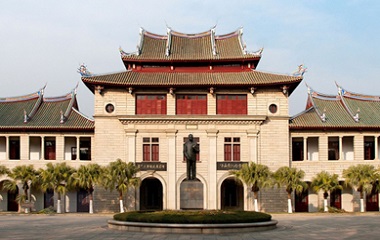
On the morning of November 6, the "My China Surprise” cultural exchange event in Hainan was held at Hainan University. Guests included Chen Bowen, head of China Daily’s Hainan bureau; Hu Jingwei, member of the Standing Committee of the CPC Hainan University Committee and head of its Publicity Department; Yang Peng, deputy secretary of the CPC Committee of the School of Journalism at Fudan University; and Jiang Rui, associate professor at Hainan University’s School of International Communication and Arts. More than 200 people attended, including Chinese and international youth representatives, media professionals, university teachers and students.

Chen Bowen said that young people are not only experiencing globalisation firsthand but are also active and dynamic participants in international communication. She added that China Daily would continue to serve as a bridge, telling stories of exchange and mutual learning between Chinese and international youth.
Drawing on Hainan University’s motto, “All rivers run into sea, all efforts aim for the highest ideals”, Hu Jingwei highlighted Hainan’s openness and inclusiveness. He said that Hainan University hoped to become the first stop for young people from around the world seeking to discover China and learn about Hainan. During the expert talks, Yang Peng and Jiang Rui gave presentations titled “Cross-cultural Understanding and Embodied Interaction in the Age of Digital Mediation” and “Continue Writing Your Future in Hainan”, respectively. They explored new approaches to cross-cultural communication and opportunities for innovation and entrepreneurship among Chinese and international youth at the free trade port.
During the youth sharing session, Ashley Tan said that Hainan was more than just a holiday island. It is a place where culture, opportunity and the future truly come together. She noted that the relationship between young people in ASEAN countries and Hainan is evolving, from the historical migration of Chinese people to Southeast Asia in search of new livelihoods to young people coming together in Hainan to create new possibilities.
Chinese participant Zhang Mengting said that members of Gen Z could both share their cultures with others and work together to drive innovation. During the roundtable discussion, young participants from Morocco, Russia and the United States joined Chinese participant Yu Wenqian in drawing on their experiences during the visits to propose ideas for cooperation in cultural exchange, international communication and youth collaboration. Chinese and international participants also showcased their individual talents through a variety of performances.

The event was jointly organised by China Daily’s 21st Century English Education Media and China’s international government services information platform. It aimed to create opportunities for dialogue and exchange between Chinese and international youth, showcase the openness and vitality of the Hainan Free Trade Port through the eyes of Gen Z from around the world, and help raise Hainan’s international profile while promoting international cultural, scientific and technological cooperation.
From a cup of tea on Qilou Old Street to a gaming account at the software park, and from the flow of data in Wenchang to the tracking codes in Lecheng, the young participants explored not only the tangible workings of different industries but also the underlying spirit of openness that connects them. With young people serving as bridges and real-life experiences as the means of communication, the stories of “My China Surprise” are reaching the world.